
Curtains Systems That Shape Lights
Updated: Jan 26

Soften & Reduce Glare
Specified to respond to real living patterns.
Light is not managed by fabric alone; it is shaped through systems. At RAWNAQ, curtains systems are designed to respond to how light moves through space by hour, by season, and by use. Our Signature Collection adapts technical solutions to architectural intent, ensuring light supports comfort, privacy, and spatial balance.
Understanding Light as a Design Variable
Daylight, Orientation, and Use
Every project begins with understanding light conditions. Window orientation, exposure, and room function determine how light should be filtered, softened, or controlled. Curtains systems are specified to respond to real living patterns, not generic assumptions.
From Soft Diffusion to Controlled Shading
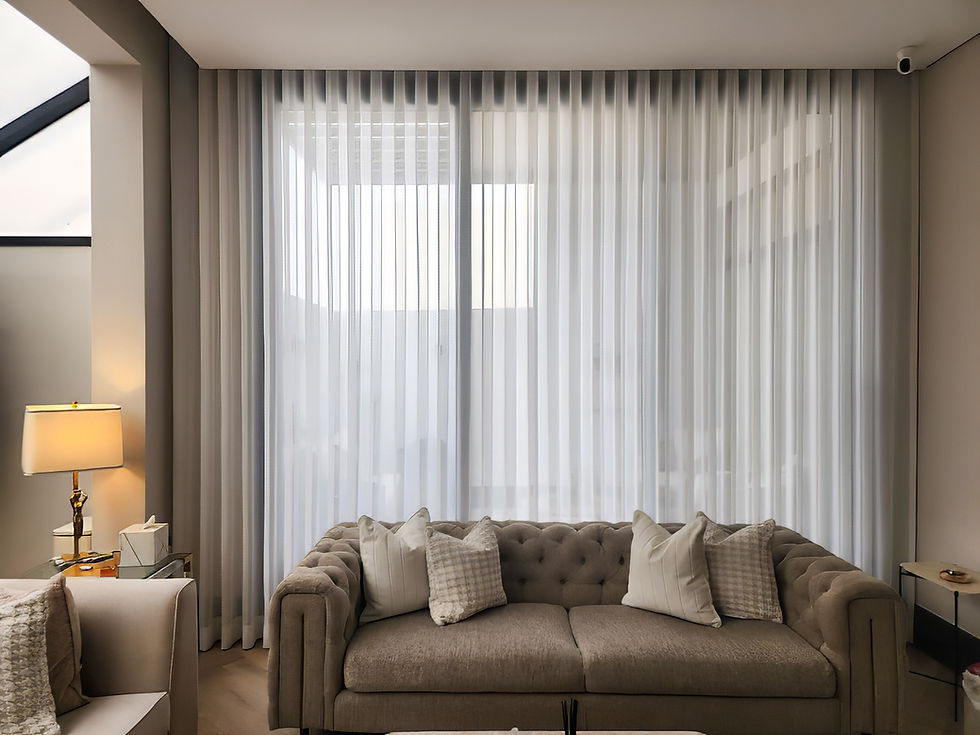
Sheer layers soften daylight and reduce glare, while heavier curtains manage contrast and enclosure. The correct system balances openness and protection allowing light to enrich space rather than disrupt it.
Curtain Systems as Functional Architecture
Single and Layered System Logic
Our Signature Collection includes single and layered curtain systems designed to perform distinct roles. Layering is introduced only when it adds functional value such as transitioning from daytime transparency to evening privacy.
Manual and Motorized Solutions
System selection considers ceiling height, span, and frequency of use. Motorization is applied where scale and daily operation demand precision and ease, ensuring consistency over time without visual intrusion.
How RAWNAQ Adapts Light Control to Project Needs
Consultation Before Specification
Design consultation is central to achieving effective light control. Designers and clients are guided through system options, fabric behavior, and operational logic to ensure decisions align with both architecture and lifestyle.
Reducing Common Light-Related Challenges
Issues such as glare, overheating, uneven light, or ineffective blackout are resolved through informed system design matching curtain type, track configuration, and layering strategy to the project’s real conditions.
Behind the Curtain: Design Balance Through System Thinking
Light control is most successful when systems are integrated, not added. RAWNAQ approaches curtains as part of the architectural language where technical precision and aesthetic restraint work together to deliver long-term value and comfort.

Comments