
Drapery as Architectural Balance
Updated: Jan 26
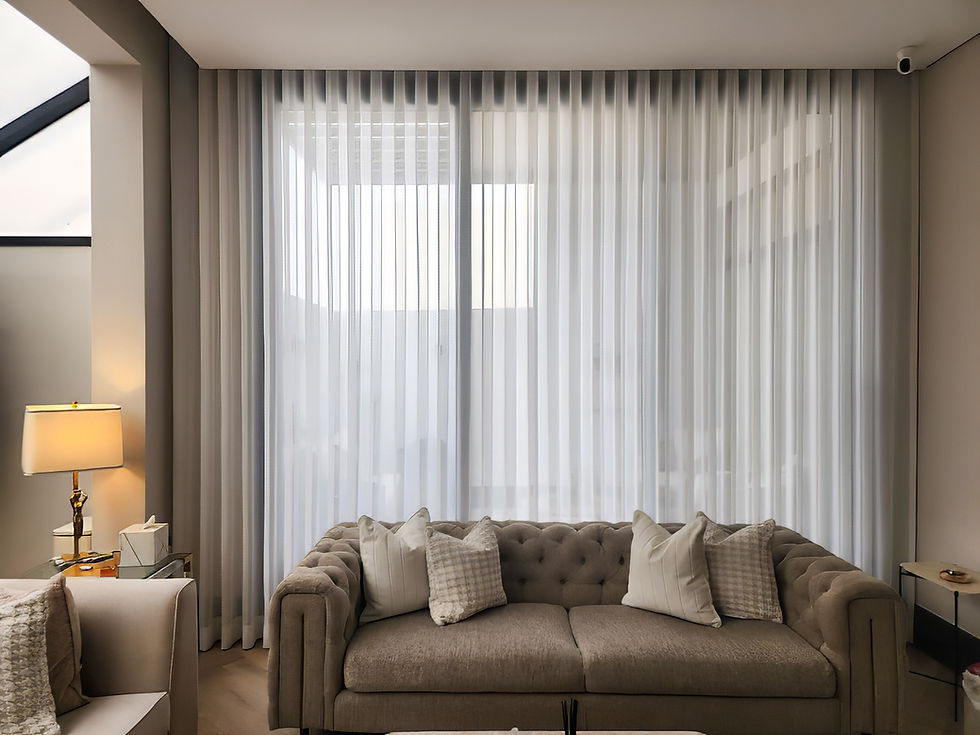
Drapes are spatial instruments. When scale and proportion are considered correctly, drapes extend architecture, shaping height, framing openings, and bringing visual order to a room. At RAWNAQ, scale and proportion guide every drapery decision within our Signature Collection.
Understanding Scale in Drapery Design
Height, Volume, and Spatial Perception
Scale determines how a space is perceived. Ceiling height, wall width, and window dimensions inform drape length, fullness, and stacking. Properly scaled drapes enhance verticality and openness, while poorly scaled systems can compress or overwhelm a room.
Adapting to Different Project Conditions
From moderate ceilings to expansive architectural volumes, our drapery solutions are adapted, not standardized. Scale is adjusted through fabric weight, pleat structure, and track configuration to maintain balance across residential, hospitality, and commercial projects.

Fullness & Stacking
Amount of fabric used relative to the window width for rich folds, while "stacking" is the space curtains take up when fully open.
Proportion as a Design Discipline
The Relationship Between Fabric and Architecture
Proportion defines how drapes relate to surrounding elements, such as walls, floors, furniture, and light. Fullness ratios, hem treatments, and pleat spacing are calibrated to ensure drapes feel intentional rather than excessive.
Why Proportion Protects Long-Term Value
Well-proportioned drapes age gracefully. They reduce visual fatigue, minimize future modifications, and support long-term aesthetic stability, key considerations for clients investing in quality rather than trend.
How RAWNAQ’s Signature Drapes Apply These Principles
Consultative Design, Not Preset Solutions
Every project begins with consultation. Designers and clients are guided through scale assessment, spatial analysis, and fabric behavior to ensure drapes are specified for real use, not assumptions.
Precision Through Craft and System Selection
Our Signature Collection adapts scale and proportion through controlled craftsmanship, track placement, layering logic, and material selection, ensuring drapes support both architectural intent and daily living needs.
Behind the Drapes: Advice That Shapes Outcomes
Addressing Common Client Pains
Clients often struggle with ceilings that feel low, windows that appear disproportionate, or drapes that dominate the room. Through informed advice and technical clarity, these challenges are resolved at the design stage before installation.
Design Balance as a Shared Responsibility
Scale and proportion are achieved through collaboration between the architect, the designer, and the drapery specialist. RAWNAQ acts as a technical and aesthetic partner, translating vision into precise, buildable solutions.

Comments